Homeopathy for sciatica: pressure vs motion vs darting
Original ItsHomeopathy in-depth guide to sciatica.


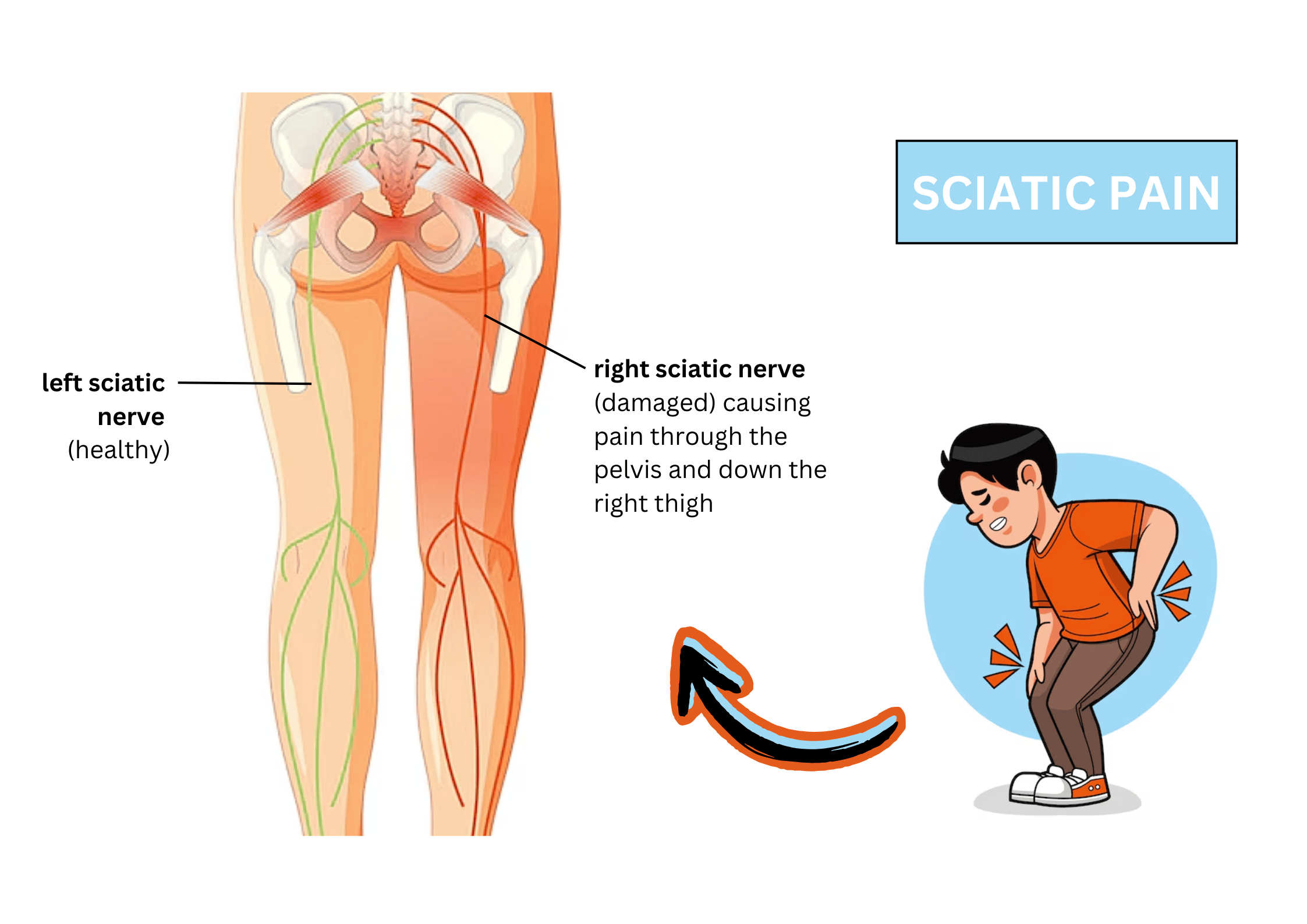
Homeopathy for sciatica: pressure vs motion vs darting — an original ItsHomeopathy guide. We match patterns, not labels. Every recommendation includes its safety boundary.
Quick answer
Common remedies for sciatica include Colocynthis, Magnesia phos, and Rhus tox. Colocynthis suits pressure-better cramping. Magnesia phos suits heat-better darting. Rhus tox suits better-motion pain. Shortlists can mislead. Selection depends on differentiation and staging. Read the whole guide before considering any remedy.
Modalities first: the decision engine
Three questions separate good selection from guessing. What makes it better or worse? Consider heat, cold, motion, and time. What does it feel like? Note burning, stitching, or heaviness. Check thirst and sleep shifts. Who is experiencing it? Note if they are irritable, weepy, or silent. Remedies covering the most axes win. Single-symptom matches lose.
The shortlist in depth
1. Colocynthis
This remedy suits pressure-better cramping. It requires convergent evidence to earn its place. The sensation quality must match. At least two modalities must agree. Concomitants like thirst and sleep must not contradict. One match is just interest. Three independent agreements create candidacy.
Study it closely when the portrait mirrors the case. Set it aside when thermal response or temperament oppose it. Do this even if the label invites it. At the bedside, write the remedy next to supporting case lines. Unsupported names do not get doses.
Differentiation drill: Pair Colocynthis with its nearest rival. Force the distinction onto three axes: thermal, temperament, and concomitant. If you cannot articulate the separation in two sentences, study both portraits again. Most failed prescriptions trace to skipped drills.
2. Magnesia phos
This remedy suits heat-better darting. It requires convergent evidence to earn its place. The sensation quality must match. At least two modalities must agree. Concomitants like thirst and sleep must not contradict. One match is just interest. Three independent agreements create candidacy.
Study it closely when the portrait mirrors the case. Set it aside when thermal response or temperament oppose it. Do this even if the label invites it. At the bedside, write the remedy next to supporting case lines. Unsupported names do not get doses.
Differentiation drill: Pair Magnesia phos with its nearest rival. Force the distinction onto three axes: thermal, temperament, and concomitant. If you cannot articulate the separation in two sentences, study both portraits again. Most failed prescriptions trace to skipped drills.
3. Rhus tox
This remedy suits better-motion pain. It requires convergent evidence to earn its place. The sensation quality must match. At least two modalities must agree. Concomitants like thirst and sleep must not contradict. One match is just interest. Three independent agreements create candidacy.
Study it closely when the portrait mirrors the case. Set it aside when thermal response or temperament oppose it. Do this even if the label invites it. At the bedside, write the remedy next to supporting case lines. Unsupported names do not get doses.
Differentiation drill: Pair Rhus tox with its nearest rival. Force the distinction onto three axes: thermal, temperament, and concomitant. If you cannot articulate the separation in two sentences, study both portraits again. Most failed prescriptions trace to skipped drills.
4. Gnaphalium
This remedy suits numbness. It requires convergent evidence to earn its place. The sensation quality must match. At least two modalities must agree. Concomitants like thirst and sleep must not contradict. One match is just interest. Three independent agreements create candidacy.
Study it closely when the portrait mirrors the case. Set it aside when thermal response or temperament oppose it. Do this even if the label invites it. At the bedside, write the remedy next to supporting case lines. Unsupported names do not get doses.
Differentiation drill: Pair Gnaphalium with its nearest rival. Force the distinction onto three axes: thermal, temperament, and concomitant. If you cannot articulate the separation in two sentences, study both portraits again. Most failed prescriptions trace to skipped drills.
5. Hypericum
This remedy suits post-injury shooting pain. It requires convergent evidence to earn its place. The sensation quality must match. At least two modalities must agree. Concomitants like thirst and sleep must not contradict. One match is just interest. Three independent agreements create candidacy.
Study it closely when the portrait mirrors the case. Set it aside when thermal response or temperament oppose it. Do this even if the label invites it. At the bedside, write the remedy next to supporting case lines. Unsupported names do not get doses.
Differentiation drill: Pair Hypericum with its nearest rival. Force the distinction onto three axes: thermal, temperament, and concomitant. If you cannot articulate the separation in two sentences, study both portraits again. Most failed prescriptions trace to skipped drills.
Worked illustration
Two people share one label. The first is chilly and thirsty. They are restless after midnight. They feel better with warmth and company. The second is warm-blooded and thirstless. They are weepy and comforted by consolation. They feel better outdoors. Classical texts study different remedies for these two. Individualization is visible here. Your case deserves the same workup.
Second illustration — the partial match
A third person matches the leading remedy on the chief complaint. They match one modality. However, thirst, sleep, and temperament point the other way. Beginners dose on the partial match. They then wonder at the non-result. Trained prescribers recognize the 2-against-3 deficit. They keep observing. Restraint is a method. A shortlist is a hypothesis set. Hypotheses earn doses only through convergence. Log the case for a week. Let the missing discriminators declare themselves.
Costly mistakes that waste months
List-picking without verifying discriminators is the commonest failure. It produces sequences of near-miss prescriptions. Potency escalation against bad matches risks proving pictures. Raising strength cannot rescue wrong selection. Combination dosing blurs assessment beyond reading. Ignoring maintaining causes wastes time. These include medicines, sleep apnoea, and strain. Skipping red-flag exits favors “giving it one more dose.” Each mistake is prevented by the protocol section above. Apply it as written, not as remembered.
Building your reference shelf
Cross-check shortlist portraits in at least two materia medicas. Use Boericke for speed. Use Kent, Clarke, or Vermeulen for depth. Keep a repertory handy for rubric verification. Kent or Synthesis works well. Maintain a personal notebook of verified discriminators. Record the two-sentence separations that decided your cases. Revisit this guide after ten logged cases. Confusing sections will become useful.
Practical protocol
Confirm stage: Home study suits recent, mild, clearly matched pictures. Route recurrent, severe, or unclear cases to a practitioner. Include vulnerable groups in this route. One dose: Take a single low-potency dose of the best fit. Then observe, do not schedule. Log: Record sleep, chief symptom, digestion, and temperature. Do this at 6, 24, and 72 hours. Repeat only on clear relapse after genuine improvement. Exit on red flags, strong aggravation, or changed picture. Also exit after two well-matched doses without movement.
Self-care that carries the outcome
Stay mobile and try physiotherapy. Use heat trials. Run these consistently for a fortnight. They change the terrain and clarify the pattern. They often do more than the shortlist. Log adherence alongside symptoms. This helps separate remedy signal from foundation noise.
Safety and escalation
Saddle numbness, retention, and progressive weakness need prompt assessment. Educational material never overrides these exits. State the worrying feature explicitly when seeking care. This allows triage to act fast.
When home study ends — referral map
Route to practitioner-led care when the presentation is recurrent or entrenched. Also route when two well-matched doses produce no movement. Route when modalities stay unclear after a fortnight of logging. Include vulnerable groups or mental-health dimensions. Route if any red flag appears. Route to medical assessment in parallel for diagnosis and treatment. Do not wait for infections, injuries, or bleeding. The best outcomes come from coordinated trios. This includes the patient, practitioner, and medical team. Use shared records, not solo heroics. Book the appointment while continuing foundations. Do not pause medicine for remedy trial.
Reading response: a mini-manual
Steady improvement means hands off. Let it run and keep logging. If improvement stalls in the same picture, reassess repetition. Use practitioner input rather than reflex redosing. Sideways drift or partial shifts mean re-take concomitants. The picture may have changed remedies on you. Brief intensification then improvement is a classical aggravation pattern. Hold, observe, and do not repeat into it. No movement after two good matches means match or potency was off. Return to observation and obstacle review. Any red flag at any point means medicine first. Theory comes later.
Twelve-week self-study plan for this topic
Weeks 1–2: Read the shortlist portraits. Write each two-sentence separation from memory. Weeks 3–4: Log five real observations. Use the three-question framework without dosing. Weeks 5–8: Study ten full monographs. Note which discriminators recur. Weeks 9–10: Revisit your early logs. Grade your own selection logic. Weeks 11–12: Take one supervised lesson or clinic observation. Compare its method with yours. Learners who follow dated plans outperform readers. Method is a practice log, not a library.
Your case log template (copy into a notebook)
Date and trigger | exact sensation verbs | better / worse for this episode | sleep, digestion, temperature notes | remedy name, potency, manufacturer, dose time | 6-hour, 24-hour, 72-hour entries | weekly lines for longer complaints. Review monthly. Circle recurrent modalities and triggers. Circled items across episodes expose the constitutional thread. Single-episode prescribing misses this. Bring the log to every consultation. Logged cases resolve in fewer visits than narrated ones.
Frequently asked questions
Can I combine two remedies from the shortlist?
Classical method studies one remedy at a time. This allows the response to be read. Combinations blur assessment. Sequence with observation instead.
What potency should I use?
Home-study guides discuss low potencies (6C–30C). These suit clear acute pictures. Higher potencies and daily LM dosing are practitioner instruments. They are bound to case-taking and follow-up.
How soon should it act?
Acute mild pictures are judged in hours to days. Use tight logs. Longer horizons without review invite drift. Book follow-up instead.
What if nothing matches well?
Then the case is under-observed or mixed-layered. It may not be home-study territory. Log longer. Consider practitioner case-taking. Keep medical assessment primary.
How do I know I am improving at selection?
Your differentiation sentences get shorter and more certain. Your remedy-hopping rate falls. Your red-flag exits get faster. Track these three metrics across twenty cases. They measure method, not luck.
Can these guides replace a course?
No — they prepare you for one. Supervised live case-taking builds selection skill. Guides supply the maps. Teachers correct the navigation.
Where do I learn the method properly?
Start with the law of similars and minimum dose. Learn totality and the potency guide on this site. Then take a supervised course with live case-taking. Do this before chronic work.
Original in-depth guide for ItsHomeopathy. Consult qualified professionals for personal advice.